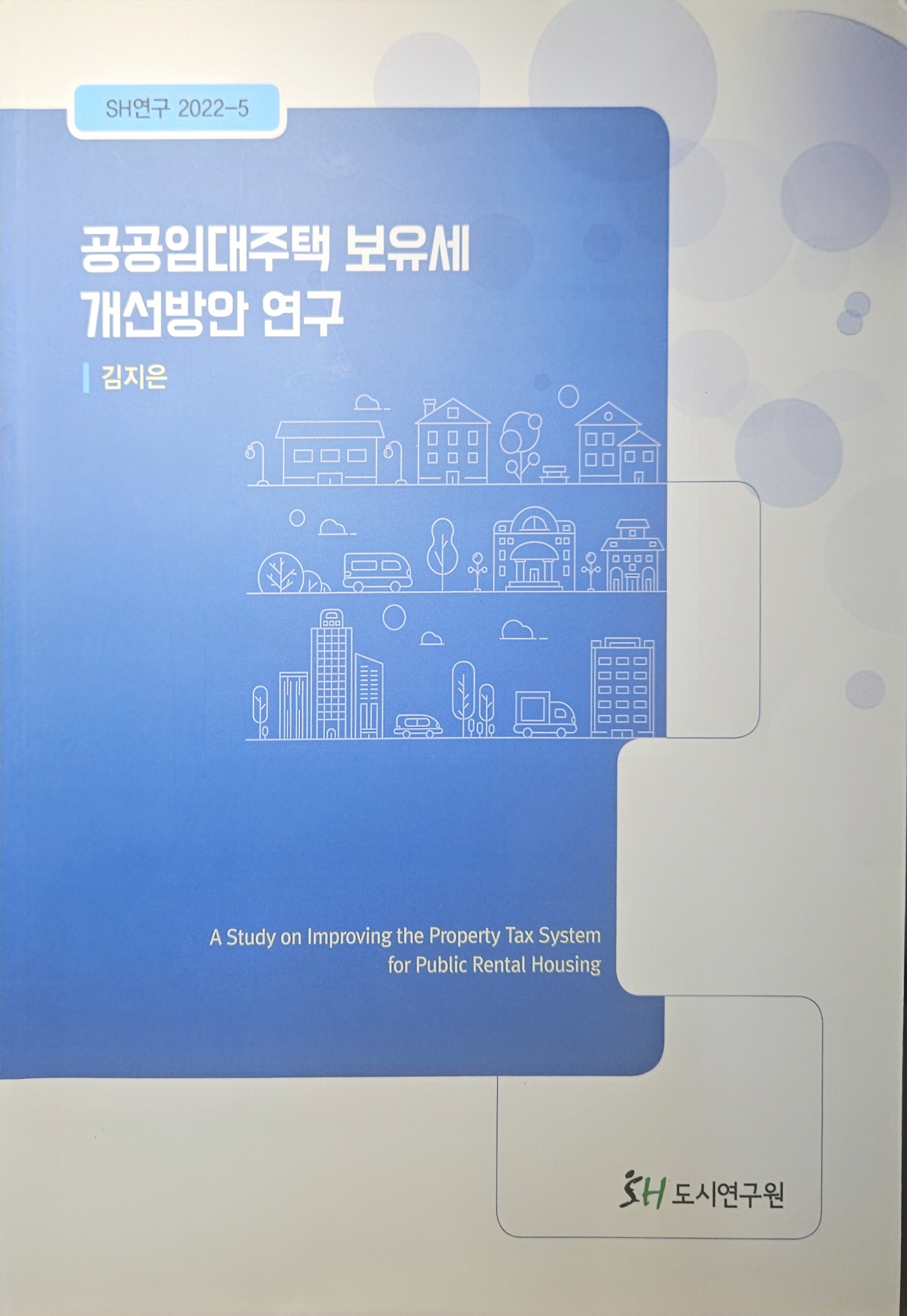
🖋️ A Study on the Improvement of Property Tax in Public Rental Housing(공공임대주택 보유세 개선방안 연구)_2022_SH도시연구원_김지은, 신영효, 조혜지

[Original Paper(논문 원본)]
https://www.dbpia.co.kr/journal/articleDetail?nodeId=NODE12342077
While I was a sophomore majoring in Tax Accounting at university, I had the opportunity to gain experience as a public research assistant. I participated in the research project titled “A Study on Improving Property Taxation for Public Rental Housing” led by Senior Researcher Ji-eun Kim at the Seoul Housing & Communities Corporation (SH) Urban Research Institute.
Although I have studied tax law, I still find real estate taxation challenging due to its rapidly changing nature. In addition, since this was my first time being directly exposed to academic research, it felt unfamiliar to quickly grasp a topic, read academic papers, and follow the overall flow within a short period of time. Nevertheless, I was able to receive detailed guidance on both direction and methodology, which was extremely helpful.
I also appreciated the thorough responses to each of my questions and the comfortable environment that allowed me to freely share my thoughts. Thanks to this, I was able to stay fully engaged throughout the entire experience, making it both very enjoyable and highly valuable.
Although I could not participate until the completion of the research due to the short working period, I was deeply touched when two copies of the report were sent to me by mail after its publication. Thanks to this, I was able to show one copy to my academic advisor. I was also gifted the book “Reforming Public Rental Housing Trapped in the ‘89 System’,” which I now keep carefully in my collection. Although I regret not requesting a handwritten autograph, I sincerely appreciate Senior Researcher Ji-eun Kim for providing me with this valuable opportunity and experience.
(대학교 세무회계학 전공 2학년 재학 중 공공연구보조 업무를 경험해 볼 수 있는 기회가 생겨 서울주택도시공사 SH도시 연구소의 김지은 수석연구원님이 진행하는 “공공임대주택 보유세 개선방안 연구”에 참여하게 되었다.
세법을 공부해 왔지만 빠르게 변화하는 부동산 조세는 아직까지도 어려운 부분이 많고, 연구를 직접적으로 접해본 것이 처음이라 짧은 시간 내에 주제를 파악하고 논문을 읽고 흐름을 따라가는 것부터 낯설었지만 방향과 방법에 대해 세세하게 가이드라인을 제시해 주셨다. 질문에도 하나하나 꼼꼼하게 답해주시고 자유롭게 의견을 이야기 하며 편안한 분위기를 만들어주셔서 근무 내내 온전히 몰입할 수 있어 즐거웠고 매우 유익한 시간이었다.
근무할 수 있는 기간이 짧았기에 연구 끝까지 함께하지 못했지만 보고서 출간 이후에 책자 2부를 따로 우편으로 보내주셔서 굉장히 감동이었다. 덕분에 한부는 교수님께 보여드릴 수 있었고, “’89체제’에 갇힌 공공임대주택 이렇게 바꿔라” 책도 선물 받았는데 자필 서명을 요청드리지 못한게 못내 아쉽지만 내 서고에 소중히 보관하고 있다. 소중한 기회와 경험을 만들어주신 김지은 수석 연구원님께 감사하다.)
[Paper Summary(논문 요약)]
Key Concepts(주요 개념)
■ Housing Welfare Contribution(주거복지 기여도): An indicator that measures the extent to which public rental housing contributes to residents’ housing stability, calculated based on rents below market rates.(공공임대주택이 입주민의 주거 안정에 기여하는 정도를 나타내는 지표로, 시세 대비 저렴한 임대료를 통해 산정)
■ Property Tax on Public Rental Housing(공공임대주택 보유세): Refers to property tax and comprehensive real estate tax imposed on the ownership of public rental housing.(공공임대주택을 소유함으로써 발생하는 재산세와 종합부동산세를 의미)
■ Local Tax Exemption and Reduction Control Act(지방세특례제한법): : A law that regulates tax reductions, exemptions, and non-taxable provisions for local taxes.(지방세의 감면, 비과세 등에 관한 사항을 규정하는 법률)
■ Comprehensive Real Estate Tax(종합부동산세): : A national tax imposed on high-value property owners, aimed at stabilizing real estate prices and ensuring fairness in tax burdens.(고액의 부동산 보유자에게 부과하는 국세로, 부동산 가격 안정과 조세 부담의 형평성을 제고하는 것을 목적으로 함)
■ Property Tax(재산세): : A local tax levied on land, buildings, and housing, serving as a major source of revenue for local governments.(토지, 건축물, 주택 등에 부과되는 지방세로, 지방자치단체의 주요 재정 수입원)
■ Fair Market Value Ratio(공정시장가액비율): : A ratio applied when calculating the tax base for property tax and comprehensive real estate tax, adjustable by the government depending on market conditions.(재산세 및 종합부동산세 과세표준을 산정할 때 적용하는 비율로, 부동산 시장 상황에 따라 정부가 조정할 수 있음)
■ Local Allocation Tax(지방교부세): : A system that redistributes a portion of national tax revenue to financially weaker local governments to reduce fiscal disparities.(국세 수입의 일부를 재정력이 약한 지방자치단체에 배분하여 재정 격차를 완화하는 제도)
1. Research Objective(연구 목적)
- To establish a rationale for improving the criteria for imposing property taxes on public rental housing.(공공임대주택 보유세 부과 기준 개선을 위한 논거를 구축하는 것을 목적)
- To suggest directions for institutional improvement.(제도 개선 방향을 제시하는 것을 목적)
2. Research Methodology(연구 방법)
- Analysis of the history, current status, and issues related to property taxation on public rental housing through literature review and expert consultation.(공공임대주택 보유세 관련 제도 연혁, 현황, 문제점을 문헌 조사 및 전문가 자문을 통해 분석)
- Analysis of SH Corporation’s property tax payment trends and their impact on public rental housing operations using internal data and Seoul statistical data.(SH공사 보유세 납부 추세 및 공공임대주택 운영에 미치는 영향을 공사 내부자료 및 서울시 통계자료를 활용하여 분석)
- Examination of international cases of property taxation on public and social housing.(해외 공공임대주택/사회주택 보유세 사례를 조사)
3. Key Findings(주요 연구 결과)
- Since 2012, the burden of property taxes on public rental housing has continuously increased, worsening the financial balance of rental housing operations.(2012년 이후 공공임대주택 보유세 부담이 지속적으로 증가하여 임대주택 운영 수지가 악화되고 있음을 밝힘)
- Following the enactment of the Local Tax Exemption and Reduction Control Act, the degree of property tax reduction for public rental housing has steadily decreased.(지방세특례제한법 제정 이후 공공임대주택 재산세 감면폭이 계속 축소되고 있음을 밝힘)
- Strengthened comprehensive real estate tax policies targeting multi-homeowners have contributed to increased tax burdens for public housing providers.(다주택자 종부세 강화 정책이 공공주택사업자의 종부세 부담 증가에 영향을 미치고 있음을 밝힘)
4. Conclusions and Implications(결론 및 시사점)
- Property tax reductions for public rental housing should be reframed as a form of support for public housing providers.(공공임대주택에 대한 보유세 감면은 공공주택사업자에 대한 지원이라는 개념으로 전환해야 함을 시사)
- Imposing comprehensive real estate tax on public rental housing is a policy contradiction and should be excluded from aggregated taxation.(공공임대주택에 대한 종합부동산세 부과는 정책적 모순이므로, 합산 대상에서 제외해야 함을 주장)
- Property tax reduction criteria should be simplified and expanded regardless of housing type or ownership entity.(주택 유형, 소유 주체와 관계없이 공공임대주택에 대한 재산세 감면 기준을 단순화하고 감면폭을 확대해야 함을 제안)
[Questions(질의)]
1. What is the overall impact of increased property tax burdens on public rental housing operations?(공공임대주택의 보유세 부담 증가가 임대주택 운영에 미치는 전반적인 영향은 무엇인가?)
- Increase in tax burden and cash flow deficits(보유세 부담의 증가와 현금수지 적자): Property tax payments accounted for 39.9% of the cash flow deficit of public rental housing as of 2021, imposing a significant financial burden. The proportion of property taxes increased from 10.1% in 2012 to 51.5% in 2021. This is the result of frozen deposits and rents to ensure housing stability for vulnerable groups, while property taxes continued to rise(공공임대주택의 보유세 납부액은 2021년 기준으로 현금수지 손실액의 39.9%를 차지하고 있으며, 이는 임대주택 운영에 상당한 재정적 부담을 주고 있음. 보유세 비중은 2012년 10.1%에서 2021년 51.5%로 증가하였으며, 이는 취약계층의 주거안정을 위해 보증금과 임대료를 동결한 반면, 보유세는 지속적으로 증가한 결과임) P65.
- Increase in property tax growth rate and operating costs(재산세 증가율과 운영 비용) :The growth rate of property tax payments for SH public rental housing reached 91.6%. The proportion of property tax relative to operational cash expenditure increased from 6% in 2012. This situation increases managerial burdens on public housing providers and makes it difficult to expand the supply of quality public rental housing(SH 공공임대주택의 재산세 납부액 증가율은 91.6%로, 이는 임대주택 운영 관련 현금 지출 대비 보유세 비중이 2012년 6%에서 증가한 것을 나타냄. 이러한 상황은 공공주택사업자의 경영 부담을 가중시켜 양질의 공공임대주택 공급 확대를 어렵게 만드는 요인으로 작용하고 있음) P65.
- Impact on local fiscal operations(지방재정 운영에 미치는 영향): Whether property tax reductions are expanded or reduced, the impact on Seoul’s and local governments’ finances is expected to be minimal. In 2021, property tax accounted for only 6.7% of Seoul’s revenue and 8.0% of expenditures. SH rental housing property tax accounted for just 0.08% of revenue and 0.04% of expenditures(공공임대주택에 대한 재산세 감면을 축소하거나 확대하더라도 서울시와 기초자치단체의 지방재정 운영에 미치는 영향은 미미할 것으로 예상됨. 2021년 서울시 세입에서 재산세가 차지하는 비중은 6.7%, 세출은 8.0%에 불과하며, SH 임대주택 재산세는 서울시 세입의 0.08%, 세출의 0.04%에 해당함) P9.
- Overall, the increase in property tax burdens intensifies financial pressure on operations and negatively affects both the quality and supply of public rental housing.(이와 같이, 공공임대주택의 보유세 부담 증가는 운영의 재정적 압박을 증가시키고, 결과적으로 공공임대주택 공급의 질과 양에 부정적인 영향을 미치고 있음)
2. If property tax burdens amount to 51% of rental income, what specific financial difficulties arise?(보유세 부담이 임대수입의 51%에 달한다면, 공공임대주택 운영에서 어떤 구체적인 재정적 어려움이 발생할지?)
- Expansion of cash flow deficits(현금수지 적자 확대): Property taxes account for 39.9% of the cash flow deficit, significantly burdening operations. With the tax ratio rising from 10.1% in 2012 to 51.5% in 2021, the mismatch between income and tax obligations worsens, making sustainable operation more difficult(보유세 납부액이 공공임대주택의 현금수지 손실액의 39.9%를 차지하고 있으며, 이는 운영에 상당한 재정적 부담을 초래함. 보유세 비중이 2012년 10.1%에서 2021년 51.5%로 증가함에 따라, 운영 수입 대비 보유세의 비율이 높아져 현금수지 적자가 더욱 확대될 가능성이 큼. 이러한 상황은 공공임대주택의 지속적인 운영을 어렵게 만듦) P65.
- ncrease in operating costs(운영 비용 증가): As of 2022, property tax accounts for 66% of total holding taxes. While other revenue-generating real estate assets stagnate or decrease, property tax continues to rise, increasing operational costs and reducing funds available for improving housing quality or expanding supply(SH 공공임대주택의 재산세 납부액이 2022년 기준으로 전체 보유세의 66%를 차지하고 있으며, 이는 공공임대주택 외의 다른 수익사업과 관련된 부동산 보유가 정체 또는 감소하는 가운데 보유세는 상승하고 있음을 나타냄. 이로 인해 운영 비용이 증가하고, 공공임대주택의 질적 개선이나 공급 확대에 필요한 재원이 부족해질 수 있음) P59.
- Decline in housing welfare contribution(주거복지 기여도 감소): Increased tax burdens may reduce the housing welfare contribution of SH public rental housing. Although this contribution was estimated at over 1 trillion KRW in 2021, maintaining it becomes difficult as tax burdens grow—particularly negatively impacting vulnerable groups in high-cost areas like Seoul(보유세 부담이 증가함에 따라, SH 공공임대주택의 주거복지 기여도가 감소할 위험이 있음. 2021년 SH 공공임대주택의 주거복지 기여도가 1조 4억원 이상으로 추정되지만, 보유세 부담이 커지면 이러한 기여도를 유지하기 어려워질 수 있음. 이는 특히 주거비가 높은 서울의 취약계층에게 부정적인 영향을 미칠 것임) P9.
- In summary, rising property tax burdens increase financial strain, weakening both housing welfare contributions and the quality and quantity of supply.(이와 같이, 보유세 부담의 증가는 공공임대주택 운영의 재정적 압박을 증가시키고, 결과적으로 주거복지 기여도와 공공임대주택 공급의 질과 양에 부정적인 영향을 미칠 수 있음)
3. Why did SH public rental housing property taxes increase 7.5 times?(SH 공공임대주택의 보유세가 7.5배 증가한 이유는 무엇인가?)
- Increase in taxable units and rise in official property values(재산세 부과 건수 및 공시가격 상승): A key cause is the increase in taxable units and rising official property values. For example, in Suseo Complex A, taxable units increased from 320 in 2015 to 2,214 in 2021 (about 7 times). As a result, total property tax payments rose 2.7 times, from 30 million KRW to 80 million KRW. This significantly increased the tax burden(SH 공공임대주택의 보유세 증가의 주요 원인은 재산세 부과 건수의 증가와 공시가격의 상승임. 예를 들어, 수서 A단지의 경우 2015년 320호에서 2021년 2,214호로 재산세 부과 대상이 7배 증가하였으며, 이로 인해 총 재산세 납부액이 3천만원에서 8천만원으로 2.7배 상승함. 이러한 변화는 공공임대주택의 재산세 부담을 크게 증가시킴) P64.
- Impact of legal revisions(법률 개정의 영향): A 2015 revision to the Local Tax Exemption and Reduction Control Act limited the reduction rate to 85% when property tax exceeded 500,000 KRW, even for permanent rental housing units smaller than 40㎡. This increased the number of taxable cases. Although the average tax per unit decreased due to reduction rates, the overall tax burden still rose(2015년 지방세특례제한법 개정으로 40㎡ 이하의 영구임대주택도 재산세 부과액이 50만원을 초과하는 경우 감면율이 85%로 제한됨. 이로 인해 재산세 부과 건수가 크게 증가했지만, 감면률을 적용받아 호당 평균 부과액은 낮아진 것으로 보임. 그러나 전체적으로는 보유세의 증가가 나타남) P64.
- Rising operating costs and financial pressure(운영 비용 증가와 재정적 압박): Along with increasing property taxes, operational costs also grew. As property taxes occupy a significant portion of total operating income, cash flow deficits expand, making sustainable operations more difficult(보유세의 증가와 함께 공공임대주택의 운영 비용도 증가하고 있음. 보유세가 전체 운영 수입의 상당 부분을 차지하게 되면서, 현금수지 적자가 확대되고, 이는 공공임대주택의 지속적인 운영에 어려움을 초래할 수 있음) P65.
- These factors combined led to a 7.5-fold increase in property taxes for SH public rental housing.(이러한 요인들이 복합적으로 작용하여 SH 공공임대주택의 보유세가 7.5배 증가한 것으로 분석됨)

